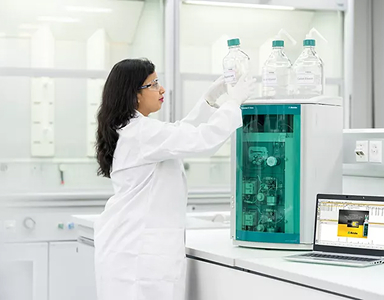

In a scenario where quality and data integrity are competitive differentiators, the pharmaceutical industry is accelerating the adoption of integrated analytical technologies. Raman spectroscopy stands out by transforming raw material identification and process monitoring.
From Laboratory to Factory Floor
Unlike traditional techniques like HPLC and gas chromatography, which require sample preparation and complex infrastructure—Raman technology allows direct analysis within the production environment. Its main advantage is generating a “molecular fingerprint,” identifying substances with high specificity, often without opening the packaging. This reduces contamination risks and speeds up material release, with over 98% accuracy in API quantification.
Agility in Raw Material Identification (RMID)
In receiving inputs, Raman is strategic. Analysis through bottles or blisters optimizes logistics and allows for decentralized quality control in warehouses and docks. Furthermore, combined with chemometric tools, the technology quickly identifies out-of-specification or counterfeit products, protecting brand integrity and patient safety.
Integration with GMP and Advanced Manufacturing
The evolution of Raman is linked to the Process Analytical Technology (PAT) concept. Current systems operate integrated with MES and LIMS platforms, ensuring compliance with standards like 21 CFR Part 11. Real-time monitoring allows for immediate adjustments and enables Real-Time Release Testing (RTRT), reducing intermediate stocks.
A Strategic Approach
While it does not fully replace classic methods, Raman’s role is complementary and essential for rapid screening and online monitoring. More than an innovation, the technology represents a paradigm shift: moving from a reactive model to a proactive, data-driven approach, consolidating itself as a pillar of efficiency and safety.
Eduardo Bravim, specialist in pharmaceutical biotechnology and quality control.