

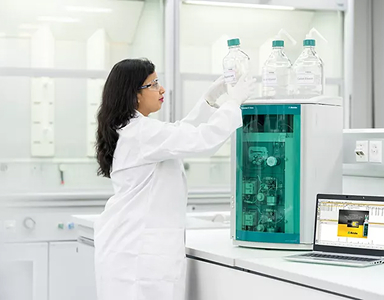
In today’s pharmaceutical landscape, having the best equipment isn’t enough; you must have absolute mastery over the data it generates. With this premise, Eduardo Rocha Bravim presents his fundamental work: Analytical Instrumentation: Fundamentals and Applications in Analytical Laboratories.
More than a technical manual, this book serves as a strategic roadmap for those seeking operational excellence and rigorous regulatory compliance.
What does this guide bring to your daily operations?
The book synthesizes Bravim’s decades of experience in the “field” and in scientific supply chain management, focusing on the three pillars that sustain the modern industry:
- The Science Behind the Result: A practical immersion into Chromatography (HPLC/GC) and Spectroscopy. The focus is not just on chemical theory, but on how to configure and extract maximum performance from each technology to ensure API purity and potency.
- Regulatory Safety (Compliance): Bravim details the entire Equipment Qualification lifecycle (DQ, IQ, OQ, PQ). It is the definitive handbook for aligning laboratory processes with the strict requirements of agencies like ANVISA, FDA, and EMA, effectively eliminating audit risks.
- Digital Transformation and AI: The author looks ahead, discussing how Artificial Intelligence and Automation ar
e redefining Data Integrity. It provides a vision of how to transform the laboratory into a unit of predictive intelligence rather than just a control point.
Why read it now?
Analytical instrumentation is the heart of technological sovereignty in any industry. Whether you are an analyst seeking specialization or a manager focused on efficiency and cost reduction, Eduardo Bravim’s book offers the clarity needed to navigate the Industry 4.0 era.